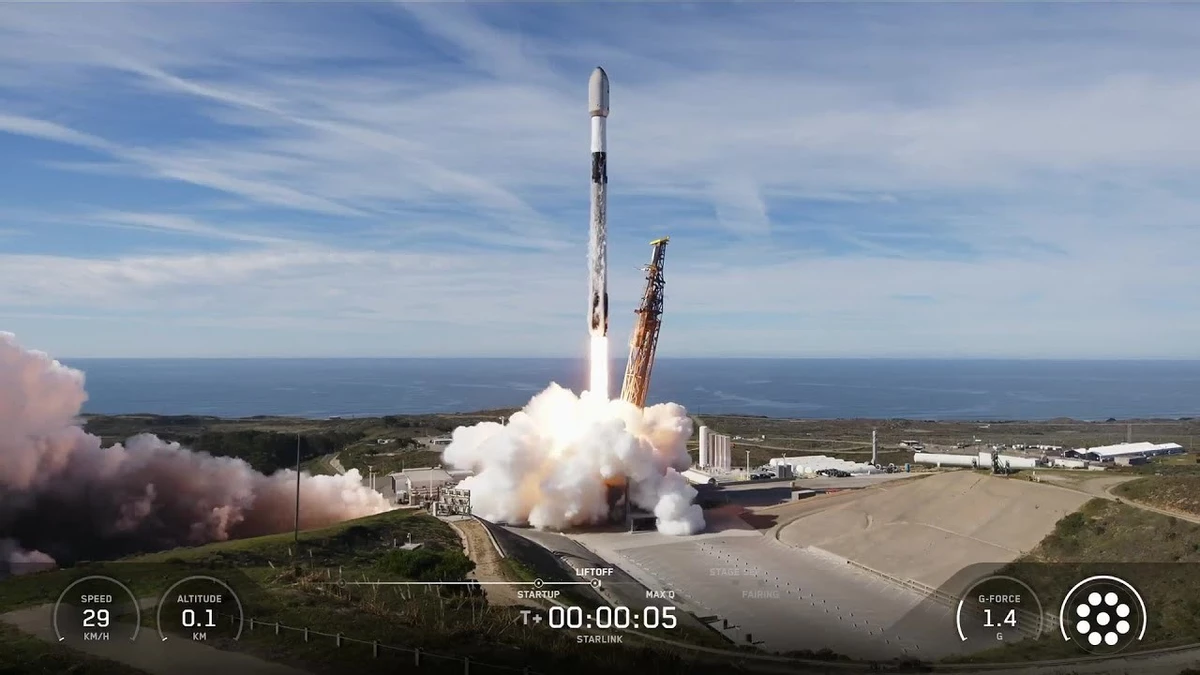

SpaceX could try the 14th Starship test launch as early as the end of August — assuming the required permits arrive, Elon Musk said. The mission isn't just about putting the first satellites of the next-gen Starlink into orbit; engineers also plan to attempt a tower-capture of the rocket's upper-stage using the launch-pad mechanical arms, a first for that element.
The July flight showed a noticeably improved upper-stage landing in the Indian Ocean, so SpaceX is stepping toward full vehicle recovery (the tower has already grabbed the Super Heavy booster on three occasions). Small wins, escalating risks — and a lot depends on whether the new catch technique works under live conditions.
Starlink V3 hardware will ride on flight 14 for testing. Musk says these V3 sats should deliver approx. 10x the bandwidth and data-density of current models; the company hopes to launch up to 60 such sats per Starship flight — yes, 60 sats/flight (short: sats).
NASA is watching closely because it is evaluating Starship as a possible lunar lander. Musk expects Starship to reach about 1x/day cadence in roughly ≈1 yr — an ambitious goal, perhaps optimistic, yet clearly the target that now drives the schedule.